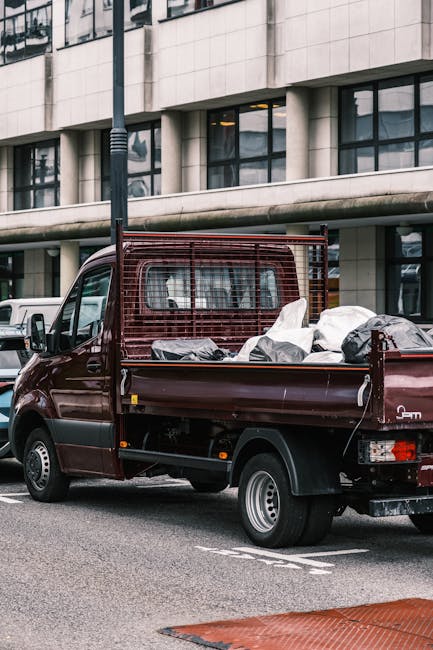
Licensed Rubbish Removal Southwark Proof of Insurance Explained
If you are comparing rubbish removal options in Southwark, the licence is only half the story. The other half is proof of insurance, and that is where many people get caught out. Licensed Rubbish Removal Southwark Proof of Insurance Explained is not just a phrase for peace of mind; it is a practical way to check that the company you hire can legally and safely handle your waste, and that you are not left carrying the risk if something goes wrong.
That matters whether you are clearing a flat after a move, dealing with builders' waste, emptying a garage, or arranging a larger household clearance. In busy parts of Southwark, with tight stairwells, parked cars, shared entrances and the odd awkward basement step, a clearance job can go from straightforward to messy in seconds. Insurance is what helps separate a professional service from a hopeful van and a clipboard. Let's face it, nobody wants that surprise.
This guide explains what proof of insurance should cover, how to verify it, when it matters most, and what good practice looks like in the UK. You will also find a practical checklist, a comparison table, and real-world guidance to help you choose with more confidence.
Table of Contents
- Why Licensed Rubbish Removal Southwark Proof of Insurance Explained Matters
- How Licensed Rubbish Removal Southwark Proof of Insurance Explained Works
- Key Benefits and Practical Advantages
- Who This Is For and When It Makes Sense
- Step-by-Step Guidance
- Expert Tips for Better Results
- Common Mistakes to Avoid
- Tools, Resources and Recommendations
- Law, Compliance, Standards, or Best Practice
- Options, Methods, or Comparison Table
- Case Study or Real-World Example
- Practical Checklist
- Conclusion
- Frequently Asked Questions
Why Licensed Rubbish Removal Southwark Proof of Insurance Explained Matters
The short version: licence tells you the business should be authorised to carry waste, but insurance tells you what happens if the job damages property, injures someone, or goes wrong in transit. Both matter. One without the other is a bit like having a van with no brakes. Technically moving, but not reassuring.
In Southwark, rubbish removal often happens in settings where the risk is higher than people expect. Think narrow hallways in older properties, shared bin stores, loading bays with limited access, or a sofa that has to be turned three times to get out of a first-floor flat. If a wall gets scuffed, a lift is damaged, or waste is dropped and creates an issue on the pavement, insurance can make the difference between a simple claim process and a very awkward conversation.
For customers, proof of insurance is mainly about trust. It shows that the company is not asking you to take a leap of faith. It also suggests the business has thought through its operations properly. That usually goes hand in hand with better systems, better training, and less chaos on the day. Not always, but often enough to matter.
There is another reason this topic matters: people sometimes assume that all clearance companies are the same because they do similar work. They are not. A professional team should be able to explain what cover they hold, what it applies to, and how it protects the customer. If they sound vague, rushed, or irritated by the question, that is useful information in itself.
Expert summary: In rubbish removal, the licence confirms permission to carry waste, while insurance helps protect against accidental damage, injury, and certain service risks. You want both, clearly explained and easy to evidence.
How Licensed Rubbish Removal Southwark Proof of Insurance Explained Works
Proof of insurance is usually a simple document trail, but the meaning behind it is where people get confused. A company may carry several types of cover, and not every policy protects the same thing. You are not looking for a fancy certificate just for show. You are checking whether the cover is relevant to the job you need done.
In practice, the process often looks like this:
- The customer requests confirmation that the company is licensed and insured.
- The company provides evidence, usually in the form of a certificate or policy summary.
- The customer checks the details against the service they need, including the type of work, the dates, and the business name.
- If needed, the company explains the difference between public liability, employer's liability, and any other relevant protection.
The most common type customers ask about is public liability insurance. This is generally the cover people expect if property is damaged or someone is injured during the job. If workers are employed, employer's liability insurance is also a normal expectation in the UK. Depending on the company and the nature of the work, there may be additional cover for vehicles, equipment, or the handling of specific materials.
One practical point: do not rely on a quick verbal reassurance. A proper business should be comfortable providing evidence. If they only say "we're covered" and leave it there, that is not enough. You need something you can actually review.
You should also think about the scope of the job. A light furniture collection is one thing. A builders' waste clearance with rubble, broken fixtures, and sharp edges is another. If you are arranging a bigger clearance, it is sensible to look at a company's health and safety approach and how they present their insurance and safety information alongside the service itself.
Key Benefits and Practical Advantages
Once you know what the insurance covers, the benefits become easier to see. This is not about paperwork for paperwork's sake. It is about making the job cleaner, calmer, and less risky for everyone involved.
- Reduced financial risk: If accidental damage happens, there is a clear route for handling it rather than a stressful dispute.
- Better confidence in the company: Insurance proof often signals a more organised operation.
- Safer handling of awkward clearances: Heavy items, stairs, lift access and tight corners all come with small but real risks.
- Useful for landlords, tenants, and businesses: Formal proof helps when several people need reassurance before work goes ahead.
- Less chance of shortcuts: Properly insured companies usually run more structured jobs, which tends to mean fewer surprises.
There is also a subtle benefit that people overlook: better communication. Companies that take insurance and compliance seriously often explain the rest of the service more clearly too, from pricing to recycling. If you are comparing options for a larger job, that can save a lot of back-and-forth.
For example, someone clearing an office might need to coordinate with building management, use specific loading times, and keep disruption low. In that setting, a company that can point to its policies and proof documents feels far more manageable than one that says, "Don't worry, mate, it'll be fine." Hmm. Not ideal.
Who This Is For and When It Makes Sense
This matters for almost anyone booking waste removal, but some people benefit more than others. If your job is tiny and low-risk, you may not spend long thinking about insurance. But once the item list gets heavier, the access gets tighter, or the setting gets more formal, it becomes essential.
You should pay close attention if you are:
- moving out of a flat and need a one-off clearance
- clearing a house after a renovation or bereavement
- arranging a office clearance or business site clearance
- disposing of bulky furniture or mixed household items
- dealing with builders' debris after construction or refurbishment
- managing a landlord, letting agent, or property management requirement
- trying to avoid disruption to neighbours or shared spaces
Insurance proof is also helpful when several people are involved in the decision. A tenant may just want the job done, while a landlord wants liability covered, and a building manager wants to protect communal areas. In that situation, a clear certificate can stop the whole thing getting stuck in endless messages. You know the sort.
If the job is in a difficult location, such as a top-floor flat, basement storage space, or a property with fragile finishes, the need becomes even more obvious. That is where services like flat clearance, home clearance, or loft clearance are more likely to involve touchpoints where insurance matters in the real world.
Step-by-Step Guidance
If you want to check insurance properly without turning it into a half-hour interview, use a simple process. It is straightforward once you know what to ask.
- Ask for proof before booking. Do this early, not after the van is already outside.
- Check the company name. The name on the certificate should match the business you are hiring.
- Confirm the cover dates. The policy should be current on the day of your job.
- Look at the cover type. Public liability is the big one most customers expect to see, but other cover may also be relevant.
- Match the cover to the job. Bigger clearances or more complex access may justify asking more detailed questions.
- Ask what happens if something goes wrong. A clear company should be able to explain its process without dodging the question.
- Keep the paperwork. Save the confirmation with your quote or booking notes.
That last step is easy to skip, but it can be useful later if there is a question about damage, timing, or service scope. A screenshot, email, or PDF is usually enough. Old-fashioned? A bit. Useful? Absolutely.
For pricing-related checks, it is sensible to review pricing and quotes alongside the insurance information. A quote that is suspiciously low but comes with no clear evidence of cover is often a false economy. The cheapest option is not always the cheapest in the end. Hard lesson, that one.
Expert Tips for Better Results
Here are the small things that make a surprisingly big difference when hiring a licensed rubbish removal service in Southwark.
- Be specific about the items. Saying "a few bits" is not enough if there are mattresses, broken wardrobes, tiles, or builders' rubble involved.
- Describe access honestly. Stairs, narrow hallways, no lift, parking restrictions, or timed access all affect the job.
- Ask who is actually doing the work. If a company uses subcontractors, ask whether their cover still applies and how responsibility is managed.
- Check for written terms. Insurance is one part of the picture; terms and conditions explain what the company does and does not accept.
- Keep communication in writing where possible. It avoids the classic "I thought you meant..." problem.
- Look for useful supporting policies. Pages like terms and conditions, payment and security, and recycling guidance can tell you a lot about how the business operates.
If you are arranging a clearance for a more sensitive situation, such as a family home or a property with sentimental items, ask a few extra questions about handling care. Insurance does not replace common sense, but it does sit alongside it nicely.
And yes, the customer who asks detailed questions is not being difficult. They are being sensible. There is a difference.
Common Mistakes to Avoid
Most problems happen because people skip a step, not because they made a dramatic error. The same patterns appear again and again.
- Assuming a licence means full protection. It does not. Licence and insurance are separate.
- Accepting a vague answer. "We're covered" is too thin if you are making a real booking.
- Ignoring the policy date. An expired certificate is not much use.
- Not matching the cover to the job. A small domestic clearance is different from a heavy builders' waste load.
- Forgetting about shared spaces. In flats or managed buildings, damage to communal areas can matter just as much as damage inside the property.
- Choosing only on price. Cheap can be fine. Cheap with no proof? Less fine.
One of the most common oversights is not asking about item type. For instance, a job involving furniture disposal is not the same as a loose waste sack collection. If the items are awkward, large, or potentially hazardous, ask for more detail. Services such as furniture clearance and furniture disposal often involve lifting, turning, and carrying through tight domestic spaces. That is where the small print starts to matter.
Tools, Resources and Recommendations
You do not need specialist tools to check a rubbish removal company, but a little structure helps. A phone, email, and a small checklist are usually enough. If the job is larger, a photo of the waste pile and the access route can also help the company assess what they are dealing with.
Useful resources to look for on a company site include:
- an insurance and safety page
- clear service descriptions
- pricing and quote guidance
- terms and conditions
- privacy and payment information
- recycling and sustainability details
When a business presents these well, it usually makes the whole process smoother. For example, the pages on recycling and sustainability and business waste removal can help you understand how the company thinks about disposal, separation, and responsible handling. That matters if you are trying to reduce landfill or meet internal business expectations.
It can also be helpful to read about the company itself. An about us page often gives you a better feel for whether the business sounds grounded and accountable. Not glamorous, perhaps, but very useful. If you still have questions after that, the natural next step is to use the company's contact us page and ask directly.
Law, Compliance, Standards, or Best Practice
With rubbish removal, the safest approach is to follow recognised UK best practice rather than guessing. Without getting lost in legal jargon, there are a few broad expectations customers should keep in mind.
First, waste carriers should be properly authorised to transport waste. That is the licence side. Second, if the business has staff, employer's liability cover is typically expected. Third, public liability cover is a standard trust signal because it helps protect against accidental damage or injury connected to the job.
Customers are not usually expected to audit the whole business, but you are entitled to ask for evidence and to make sure the cover fits the work you need done. That is perfectly reasonable. In fact, it is best practice.
It is also sensible to look beyond the certificate itself. A company that follows good practice will generally have:
- clear booking and payment terms
- a reasonable complaints procedure
- health and safety procedures for staff and sites
- transparent disposal and recycling processes
- appropriate handling of customer data and enquiries
For business customers, this can be particularly important. If you are arranging clearance for an office or commercial premises, you may need to satisfy your own internal procurement rules or building requirements. The supporting detail matters, even if it feels a bit formal on a busy weekday morning.
You may also want to review the company's complaints procedure, payment and security, and privacy policy to get a fuller picture of how they handle customers and their information. That is not overkill. It is due diligence.
Options, Methods, or Comparison Table
People often ask whether they should hire a fully licensed and insured company, use a man-and-van style service, or simply take waste to a local facility themselves. Each route has pros and cons. The right choice depends on volume, access, risk, and time.
| Option | Best for | Main advantage | Main drawback |
|---|---|---|---|
| Licensed, insured rubbish removal company | Most domestic and commercial clearances | Professional handling and clearer protection if something goes wrong | Usually costs more than doing it yourself |
| Basic van collection without clear proof | Very small, low-risk jobs only, if at all | Can feel quick and informal | Less certainty, more risk, weaker recourse |
| Self-haul to a waste facility | Small loads, available transport, time to spare | Direct control over the process | Time, labour, vehicle access, and responsibility all stay with you |
In plain English, if the job includes heavy lifting, awkward access, or items that could damage floors, walls, or communal areas, a properly insured service is usually the safer bet. For larger domestic projects such as house clearance or garage clearance, that extra structure is rarely wasted.
Case Study or Real-World Example
Imagine a second-floor flat in Southwark with a couple of wardrobes, an old mattress, a chipped table, and a few bags of mixed junk from a long-overdue tidy-up. The hallway is narrow. The lift is small. The parking outside is awkward at the best of times. Nothing dramatic, but enough to make the job tricky.
The customer asks for proof of insurance before booking. The company provides it, along with clear terms and a straightforward quote. On the day, the team uses protective care in the hallway, works around the lift, and removes the items without fuss. A minor scuff appears on a doorframe during the move-out. Because the business has public liability cover and a sensible complaints process, the issue is handled calmly instead of turning into a shouting match in the stairwell at 8:15 in the morning. Which, frankly, is a better outcome for everyone.
Now compare that with a less careful setup. No written proof. No clear terms. No obvious process. If damage happens, the customer may be left trying to prove what was agreed, who was responsible, and whether the company can even be contacted reliably. It is not a risk worth taking if you can avoid it.
The same logic applies to a bigger job such as builders waste clearance after renovation. Broken materials, dust, sharp edges, and tight time windows all raise the stakes a little. Insurance is not the whole answer, but it is a very sensible part of the picture.
Practical Checklist
Use this before you confirm a booking.
- Have I checked that the company is licensed to carry waste?
- Have I asked for proof of insurance in writing?
- Does the company name on the policy match the company I am hiring?
- Are the cover dates current?
- Does the insurance make sense for the type of clearance I need?
- Have I described access issues honestly?
- Have I shared clear photos or item details where useful?
- Have I read the key booking terms?
- Do I understand how payment works?
- Have I kept a copy of the quote and the insurance confirmation?
If you are unsure about any of those points, slow down a little. A five-minute pause can save you a lot of hassle later. Truth be told, that is usually how good decisions happen anyway.
Conclusion
Choosing a rubbish removal company in Southwark is not just about getting rid of waste quickly. It is about trusting someone with your property, your time, and sometimes your peace of mind. That is why Licensed Rubbish Removal Southwark Proof of Insurance Explained really matters. A licence shows the business should be allowed to carry waste. Insurance shows you have a layer of protection if the job goes wrong.
The best approach is simple: ask for proof, check the details, make sure the cover fits the work, and choose a company that is clear rather than slippery. Once you get used to asking the right questions, the whole process becomes much easier. You will notice the difference immediately.
Get a free quote today and see how much you can save.
And if you are still weighing things up, that is fine too. A careful choice now tends to make the rest of the day easier, quieter, and a lot less stressful.
Frequently Asked Questions
What does proof of insurance mean for rubbish removal?
It means the company can show evidence that it holds relevant insurance cover for the work it is carrying out. Usually, customers want to see public liability insurance, and sometimes employer's liability as well. The exact cover should match the job.
Is a waste carrier licence the same as insurance?
No. A waste carrier licence is about permission to transport waste. Insurance is about protection if damage, injury, or another covered problem happens during the job. They are separate, and you should check both.
Why should I ask for insurance proof before booking?
Because it is much easier to check the paperwork before the job starts than after something has gone wrong. If the company is professional, they should be comfortable providing it.
What type of insurance is most important for rubbish removal?
For most customers, public liability insurance is the main one to ask about. If workers are employed, employer's liability is also commonly expected in the UK. Depending on the job, other cover may matter too.
Do I need insurance proof for a small household collection?
Even small jobs can involve property damage or accidents, especially in flats or homes with tight access. It may feel unnecessary at first, but a quick check is still sensible.
What should I look for on the insurance certificate?
Check the company name, the policy dates, and the type of cover listed. If the document is vague, expired, or does not match the business you are hiring, ask for clarification.
Can a company be licensed but still be a bad choice?
Yes. A licence is important, but it does not tell you everything about service quality, communication, or how carefully the team will handle your property. That is why insurance proof, terms, and overall professionalism matter too.
Does insurance cover accidental damage to my property?
Often, yes, if the policy includes relevant public liability cover and the incident falls within the policy terms. But you should never assume. Ask the company to explain what the policy covers in plain English.
What if the company refuses to show proof of insurance?
That is usually a warning sign. If they cannot or will not provide evidence, it is reasonable to look elsewhere. You do not need to make a complicated issue out of it.
Is proof of insurance useful for landlords and letting agents?
Very much so. It helps protect communal areas and reassures everyone involved that the clearance is being handled by a more accountable business.
How does insurance relate to business waste removal?
Business jobs often involve more people, more access rules, and sometimes more risk. If you are arranging commercial waste work, insurance proof becomes even more useful, along with clear terms and proper documentation.
Should I also check the company's terms and conditions?
Yes. Insurance is one part of the picture, but the terms explain booking rules, payment expectations, service limits, and what happens if plans change. That detail can save a lot of confusion later.